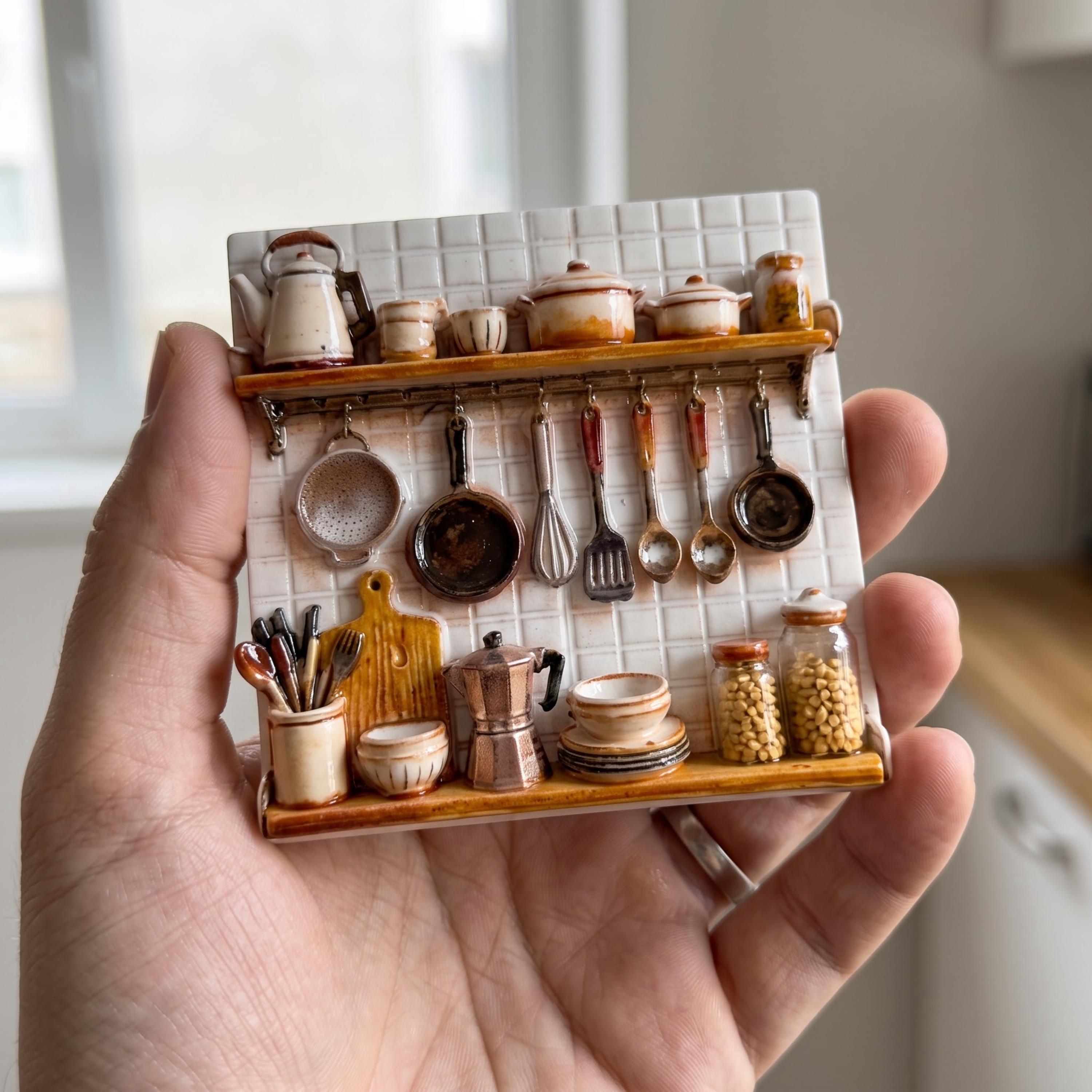
Fridge magnet styling can transform a utilitarian appliance into a curated focal point without creating visual chaos. This article offers practical approaches for arranging decorative magnets so they enhance the kitchen’s look and function. You’ll find guidance on choosing a theme, creating zones, mixing sizes and textures, and keeping safety and maintenance in mind—useful for home shoppers and independent retailers planning display ideas.
Choose a Clear Theme or Palette
Start with a simple decision: pick a theme or a restrained color palette. A coherent idea—herbal and botanical, vintage kitchen, travel souvenirs, or a neutral tonal palette—gives each magnet a role and prevents the surface from looking like a random collection. For a cozy, food-forward look, arrange pieces with warm browns and soft neutrals so they play off wood countertops and woven textiles.
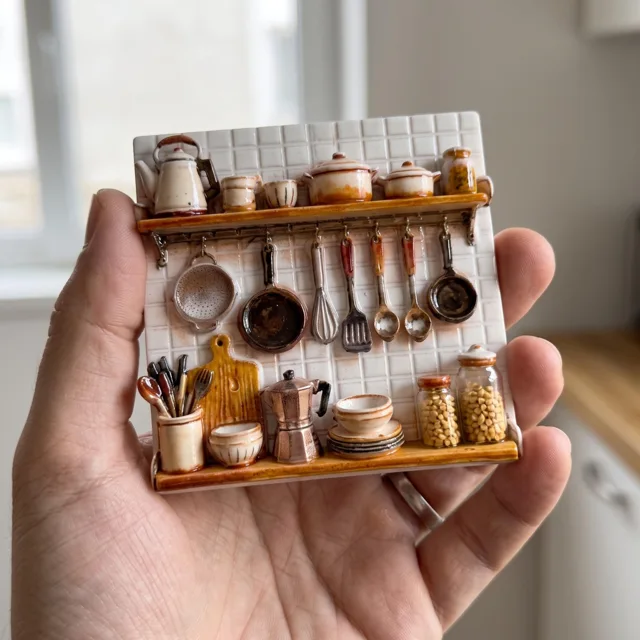
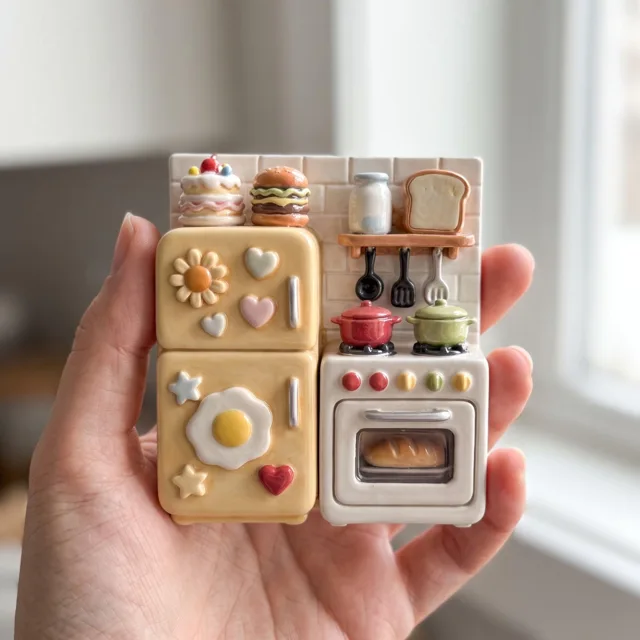
For shoppers drawn to miniature scenes, pick two or three pieces that share scale and subject matter rather than filling every inch. For example, the Resin Relief Kitchen Shelf Scene With Miniature Cookware and the Raised Miniature Stove and Refrigerator Scene complement each other: both are food-related, feature layered relief, and work within soft neutral tones. Pairing similar textures and themes creates a focused vignette instead of visual noise.
Use Negative Space Intentionally
Avoid covering the whole door. Negative space is as important as the magnets themselves because it allows each piece to breathe and be seen. Treat the refrigerator door like a gallery wall: place a standout magnet at eye level and leave space around it to draw attention. This technique helps a detailed piece read clearly and prevents competing focal points.
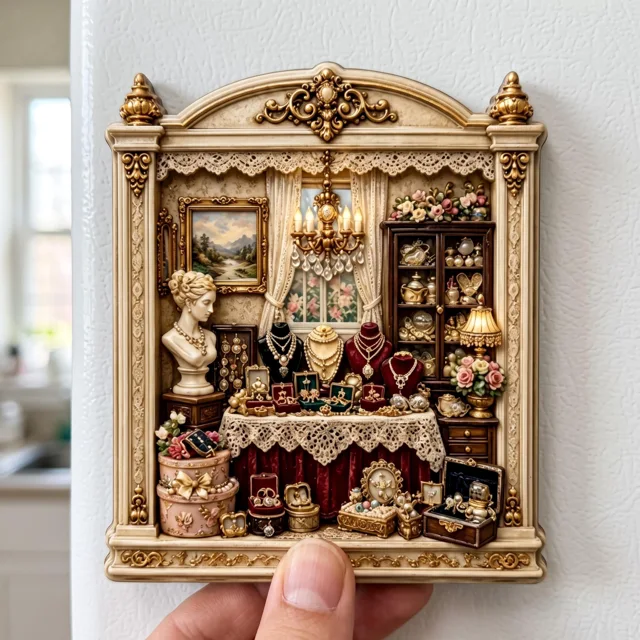
Place one or two detailed, dimensional magnets as anchors—items with raised relief offer visual interest but can look busy if clustered too tightly. For instance, the Victorian Jewelry Shop Scene is ornate and benefits from breathing room so its filigree and small motifs are noticeable rather than lost in clutter.
Create Functional Zones
Split the fridge into purposeful areas: a family message zone, a recipe/photo area, and a decorative corner. Reserve the center for practical items—grocery lists, weekly menus, and appointment reminders—using flat, low-profile magnets that won’t obscure paper. Decorative magnets, especially dimensional ones, work best in corners or along the perimeter where they act like accents.
Independent retailers can apply the same concept to shop displays: create a demo fridge with labeled zones to show customers how decorative pieces can coexist with utility. Link to related styling tips on your site and to condition information on product care with an internal reference such as /care/.
Mix Scales and Textures Carefully
Varied scale and texture keep a display interesting, but balance is key. Combine a couple of dimensional resin magnets with flatter metal or printed magnets to avoid an overly bumpy surface. Choose one larger statement magnet as an anchor and support it with smaller, subtler pieces that echo color or motif.
When arranging, place larger items diagonally or along one side to guide the eye. Small, detailed objects like the miniature cookware scene or the stove-and-fridge magnet have strong presence despite their compact size; offset them with plain space or low-profile functional magnets so the textures don’t fight for attention.
Rotate and Curate Seasonally
Regular rotation keeps a display fresh and prevents accumulation. Swap seasonal or holiday magnets in and out rather than leaving everything year-round. A rotating curation encourages selective editing: remove items that no longer fit the current theme or color story, and store extras in a labeled box.
Retailers can use rotation as a visual merchandising tool—set up seasonal groupings in the store or in product photos to show how a few well-chosen magnets create a cohesive look. For home shoppers, changing two or three pieces every season is enough to refresh the kitchen without starting from scratch.
Safety, Placement, and Practical Care
Keep safety in mind. Decorative magnets and any small detachable pieces should be kept out of reach of children and pets; if a magnet or small part is swallowed, seek urgent medical attention. Place dimensional magnets higher on the door if you have curious toddlers or energetic pets who may knock them off.
For everyday maintenance, use gentle cleaning practices so magnets remain attractive: wipe around magnets with a non-abrasive cloth and mild cleaner, and occasionally remove magnets to clean beneath them. Refer customers to care and handling guidance on your site via /care/. If you’re a retailer interested in buying for resale, direct inquiries to /wholesale/ or contact the company at [email protected]. For general questions or custom display requests, use the /contact/ page.
Presentation Ideas for Gift and Retail Settings
When merchandising magnets in a store, present them in small curated clusters on a magnetic board rather than scattering them on a shelf. Create lifestyle vignettes that include one or two dimensional magnets to show scale next to common kitchen items, and include signage explaining that these are decorative pieces suitable for magnetic surfaces.
For online or print catalogs, include close-up photos of intricate items so buyers can appreciate detailing. The layered composition of the Kitchen Shelf Scene and the charm of the Raised Miniature Stove and Refrigerator show best in a tight crop that highlights relief and texture. Clear product shots plus a short styling note help customers picture how each magnet will read on their own fridge or gift display.
Topics: fridge magnet styling, kitchen decor, magnetic display, decorative magnets, retail gift displays