Decorative fridge magnets add personality to kitchens, offices, and gifting displays, but they also present real hazards for young children and pets. This article lays out practical, specific steps retailers and home shoppers can take to reduce risk—covering display choices, storage practices, signage for retail, and immediate actions if a magnet is swallowed. The focus is on everyday, usable strategies that protect families and pets while keeping decorative pieces attractive and accessible to adult buyers.
Understand the Risks: Why Decorative Magnets Aren’t Toys
Decorative magnets are intended to embellish surfaces, not to be handled like toys. Many decorative pieces have small parts, raised edges, or brittle finishes that can detach if chewed or pulled. Small magnets and loose pieces are choking hazards for children under three and can cause serious internal injuries if ingested.
If more than one magnet or a magnet and a metallic object are swallowed, they can attract each other across intestinal walls and cause perforations, blockages, or infection. That’s why the most important safety message for parents and retailers is straightforward: keep all decorative magnets and their fragments out of reach of children and pets, and treat any suspected ingestion as a medical emergency.
Safe Display Strategies at Home
At home, display magnets on higher surfaces that are visible to adults but out of a child’s reach. Use the top half of refrigerators, metal bulletin boards mounted above counters, or a dedicated decorative magnetic strip placed at adult eye level. Avoid displays near dining tables, play areas, or where pets can jump up.
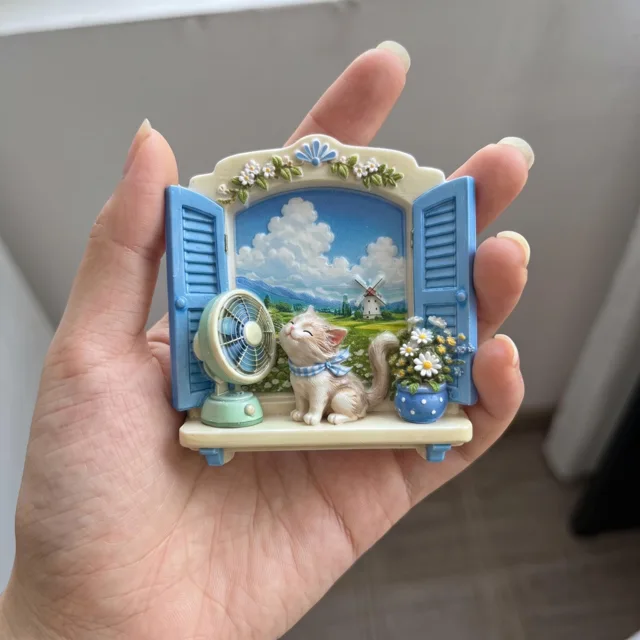
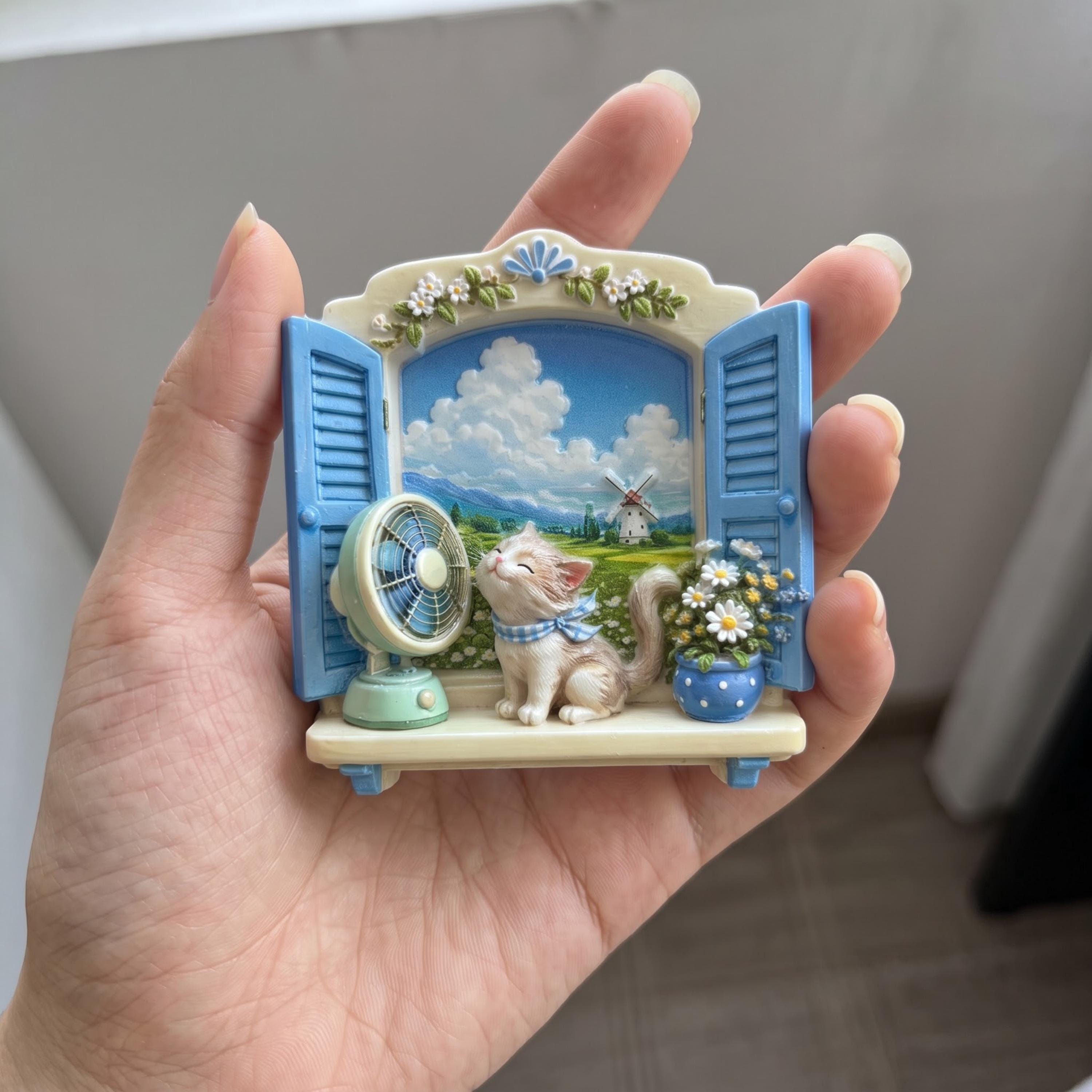
Group magnets with other adult-oriented decor and keep small or delicate pieces in enclosed shadow boxes or on shelves that sit at least four feet above the floor. If you enjoy the scene-style pieces like the Refrigerator Magnet: Cat Window Scene With Blue Shutters and Flowers, place them where they won’t be handled frequently by children. The more dimensional the piece, the more likely small elements could break off if dropped or grabbed, so reserve those for out-of-reach displays.
Storage and Handling: Keep Extras Secure
Store extra magnets and spare decorative components in clearly labeled containers with tight lids. Lockable or high cabinets are best in homes with toddlers or curious pets. Clear plastic bins keep small parts visible to adults while preventing accidental access. Consider retaining original packaging for fragile or layered magnets so you can return them to that box when not on display.
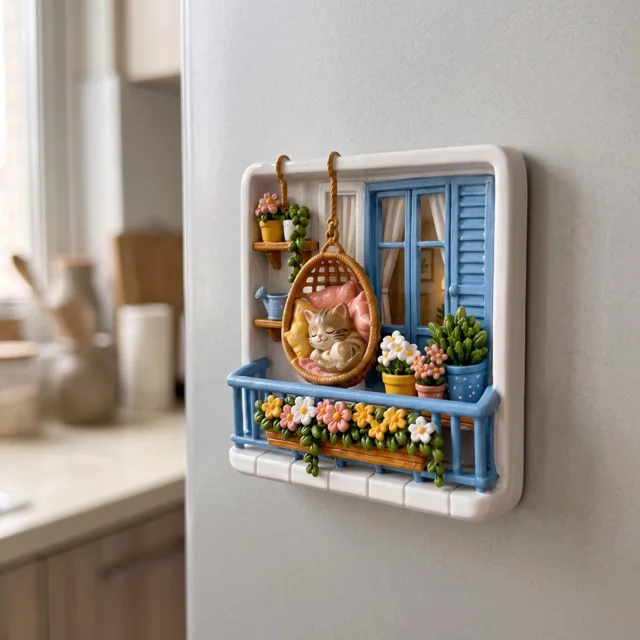
When handling decorative magnets, perform quick spot checks: look for loose elements, cracked edges, or weakened adhesives. For example, the raised detailing in the Resin Fridge Magnet: Raised Cat Balcony Scene With Colorful Flowers is charming but includes fine relief details that should be inspected periodically. If anything looks compromised, remove the magnet from circulation until it can be stored safely or repaired.
Retail and Wholesale Considerations for Independent Stores
Retailers and independent gift shops must balance attractive presentation with safety. Display adult-oriented decorative magnets on upper shelving or behind counters where staff can show items to purchasers but they’re not accessible to small customers. Use clear signage reminding shoppers that these items are decorative and not suitable for children. Simple signs near displays can communicate important cautions while keeping the merchandising inviting.
If you sell or quote wholesale terms for retailers, include safety guidance with shipments and point buyers toward your policy pages such as /wholesale/ and care instructions at /care/. For pet- and family-focused stores, curate a section of truly safe, child-friendly items and keep decorative magnets reserved for adult departments. For detailed product listing examples and to feature animal-themed pieces safely, consider linking customers to your curated sections like /collections/animal-friends/.
Pet-Proofing Tips for Magnet Displays
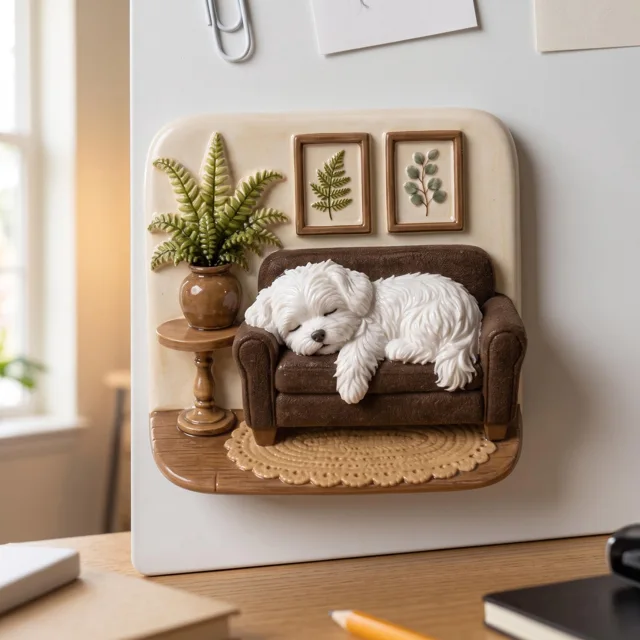
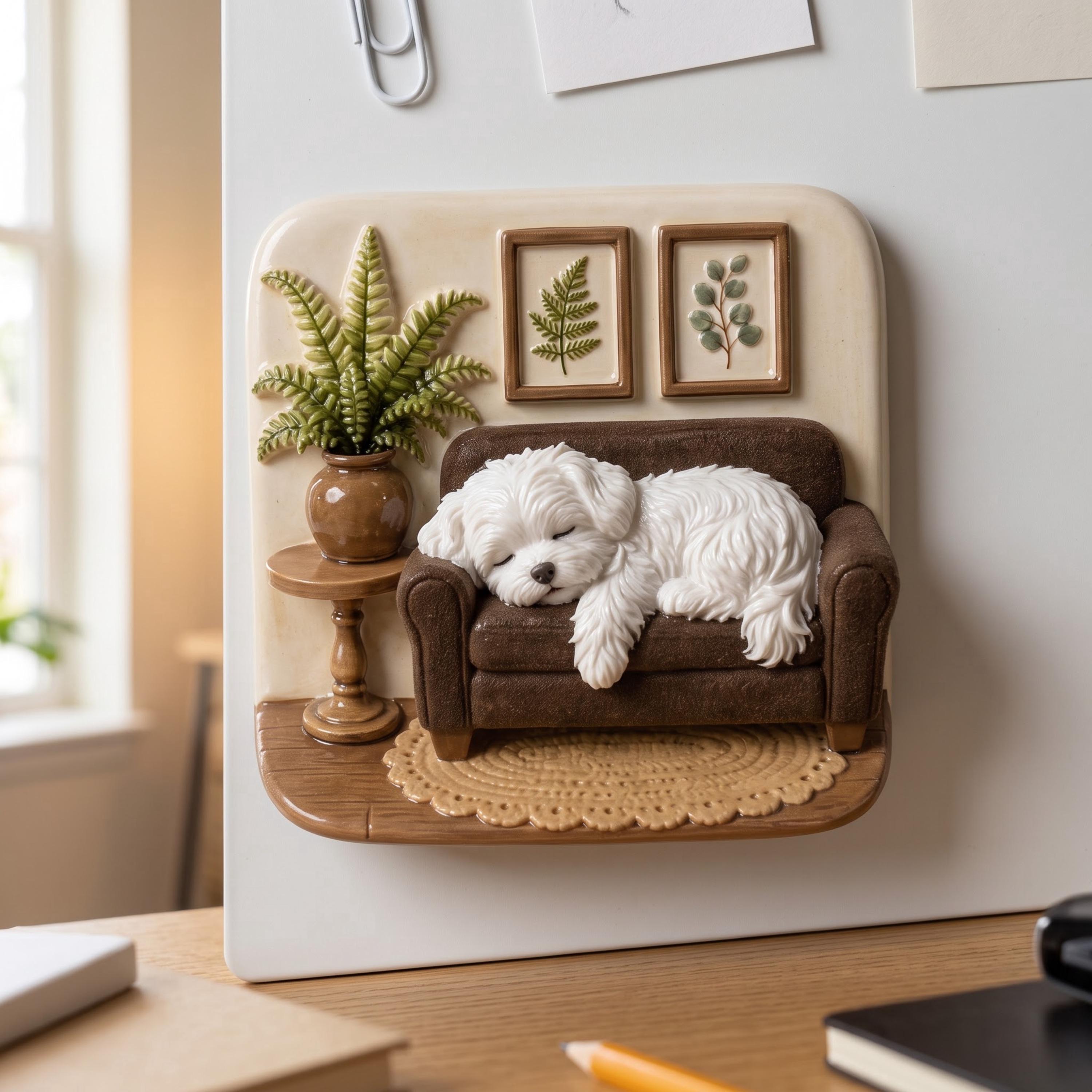
Pets, especially dogs and cats that explore with their mouths, can dislodge or ingest small decorative parts. Keep magnets away from the floor, low shelves, and the backs of chairs. If you display animal-themed magnets such as the Refrigerator Magnet: Miniature White Dog on Cozy Brown Sofa, position them where pets can’t paw at or knock them down—high-mounted metal boards are a good option.
Also monitor where children leave small accessories like fridge magnets during playtime; an unattended piece on the ground can become a pet hazard. Store magnets in pet-proof containers and train pets to avoid counters and refrigerator doors if possible. If you run a retail display, routinely check for fallen pieces and sweep low-traffic areas to remove loose magnets promptly.
What to Do If a Magnet Is Swallowed
If you suspect a child or pet has swallowed a magnet—or any small decorative part—act immediately. For humans, call emergency services or seek urgent medical care; ingestion of magnets can require prompt imaging and possible surgery. Avoid waiting to see symptoms. For pets, contact a veterinarian or an emergency veterinary clinic at once; provide details about the object swallowed if known.
Do not induce vomiting or try to remove the magnet yourself. Instead, gather information: estimate the time of ingestion, describe the object (size, number of magnets, material), and have the product URL or a photo ready to share with medical personnel. If you need to contact the shop about a product question, reach out to ECLIPSE GIFTS LLC via /contact/ or email [email protected] for assistance in identifying the item.
Labeling, Signage, and Ongoing Risk Management
Consistent labeling and visible signage are effective layers of prevention. At home, attach a small card near your magnet display reminding household members that these are decorative items and should be kept away from children and pets. In retail settings, include a similar caution on price tags or shelf labels so shoppers see the advisory at point of selection.
Keep an eye on inventory and condition over time; adhesives degrade, edges chip, and finishes fade, which can increase risk. Add periodic inspections to your routine—monthly checks in a busy shop or seasonal checks at home—so you remove or repair pieces before they become hazardous. For additional care and maintenance guidance, refer customers to your care page at /care/ and offer to answer direct product questions via /contact/.
Topics: decorative magnet safety at home, magnet safety children, pet safety magnets, fridge magnet precautions