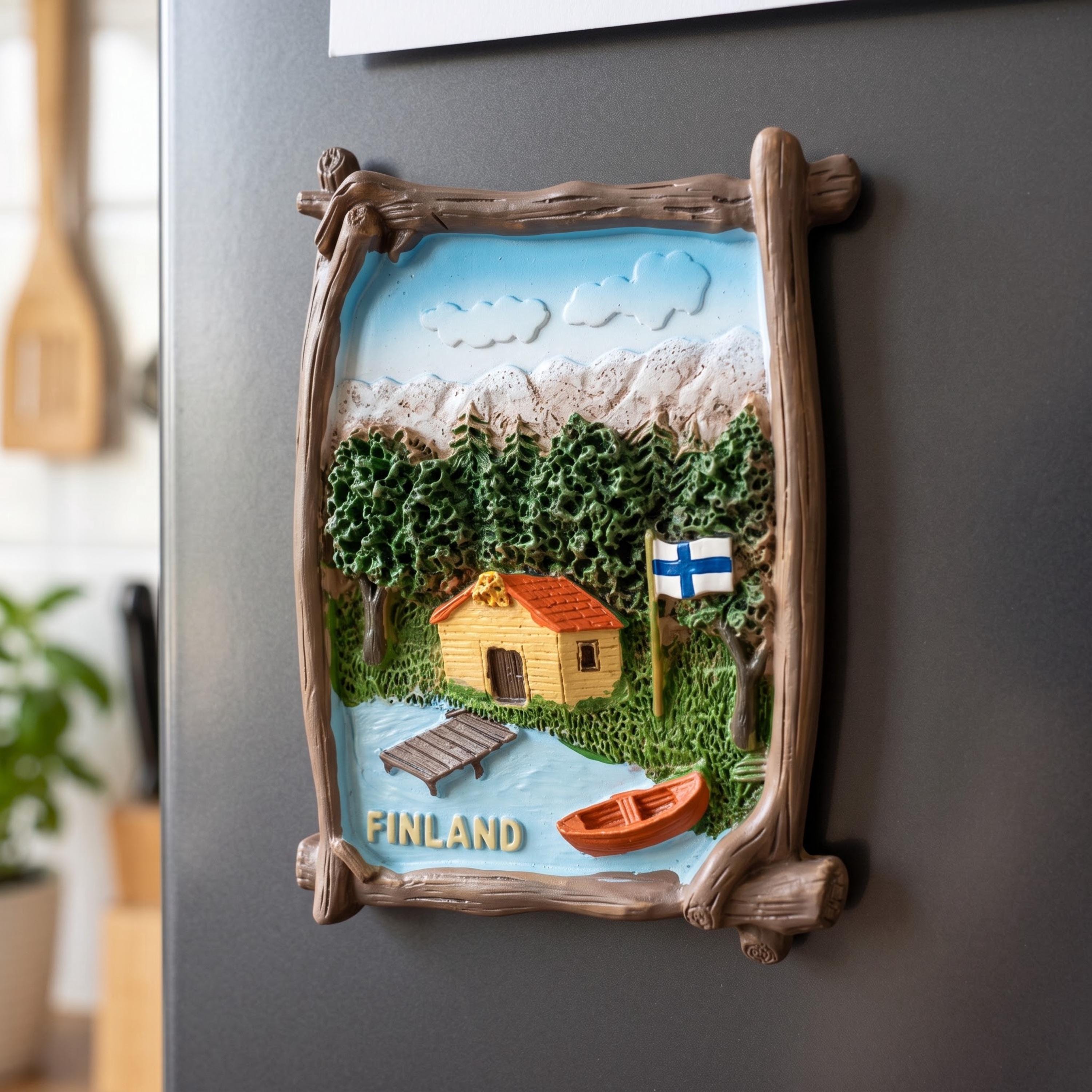
Good photography makes tiny decorative products feel tangible and desirable. This article gives independent gift retailers and home-decor shoppers concrete techniques for photographing small items—like decorative fridge magnets and miniatures—so images communicate scale, texture, color, and quality. You’ll find setup options that work on a budget, styling tips for e-commerce and social media, safety reminders for magnets and small parts, plus guidance on delivering files that help listings look professional.
Choose the right gear for the job
You don’t need a studio full of lighting to get great results for small product photography for retailers. A smartphone with a good camera can be excellent if you control lighting and stability. If you use a DSLR or mirrorless camera, choose a macro-capable lens or a lens with a short minimum focus distance so you can get crisp close-ups of fine texture and raised details. A tripod or stable surface is essential—tiny focus shifts show up easily when you crop tight.
Consider accessories that make small work easier: a small light tent for even diffusion, a portable reflector to fill shadows, and a clamp or multi-arm stand to hold props or suspend items. If you photograph many small items, a consistent backdrop and lighting kit pay back time by producing repeatable images that are easier to edit in batches.
Control light to reveal texture and depth
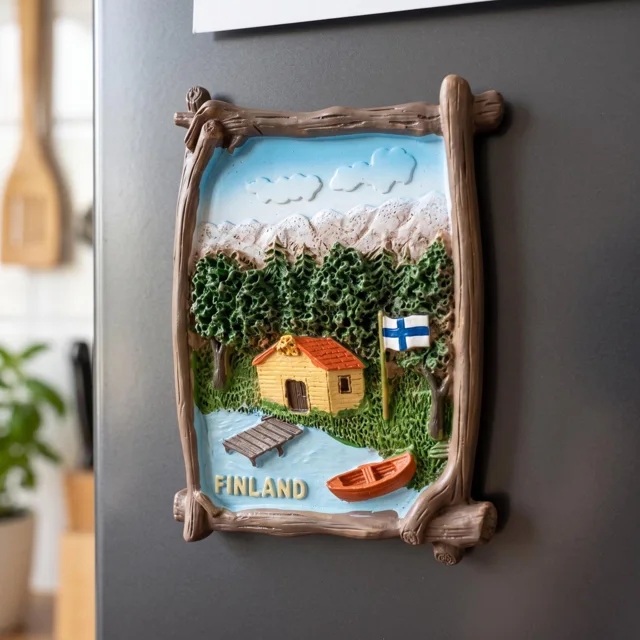
Lighting defines the look of dimensional decorative pieces. Hard direct light flattens detail, while soft diffused light gently reveals raised surfaces and subtle shadows. Use natural window light diffused through a white curtain or a softbox for a soft wraparound effect that highlights sculpted elements—like the raised scene on the "Finland Landscape Fridge Magnet"—without blowing out colors.
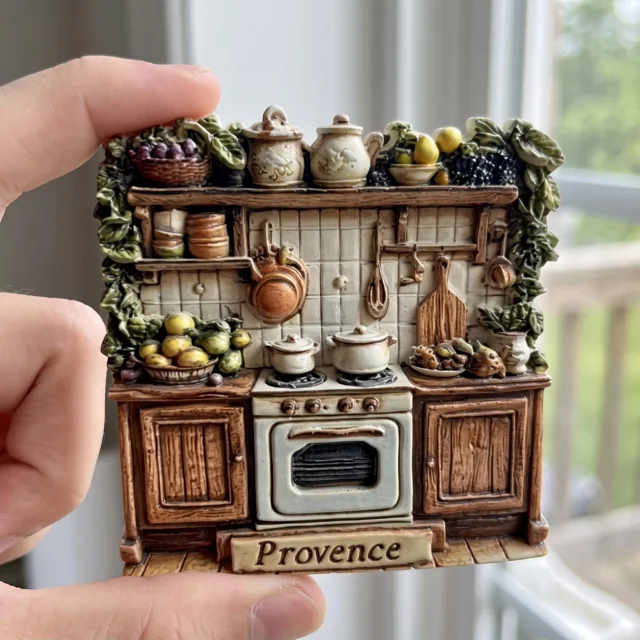
For stronger depth and drama, add a small directional fill light or reflector opposite your main light to keep details readable on shadowed surfaces. Pay attention to specular highlights on glossy or resin finishes, such as the sheen you’ll see on the "Refrigerator Magnet, Resin Rustic Kitchen Scene With Provence Plaque." Use flags (black cards) to control reflections or adjust angle and distance until reflections sit in pleasing places.
Set scale and context honestly
Small decorative items need context. A single close-up may look beautiful but give no sense of size. Include a simple prop that communicates scale: a common household object, a corner of a refrigerator door, or a ruler when appropriate for wholesale or technical listings. For magnets, showing the item on a metal surface—the refrigerator door or a magnetic board—helps buyers visualize use; place the product on a neutral section of a fridge to avoid visual clutter.
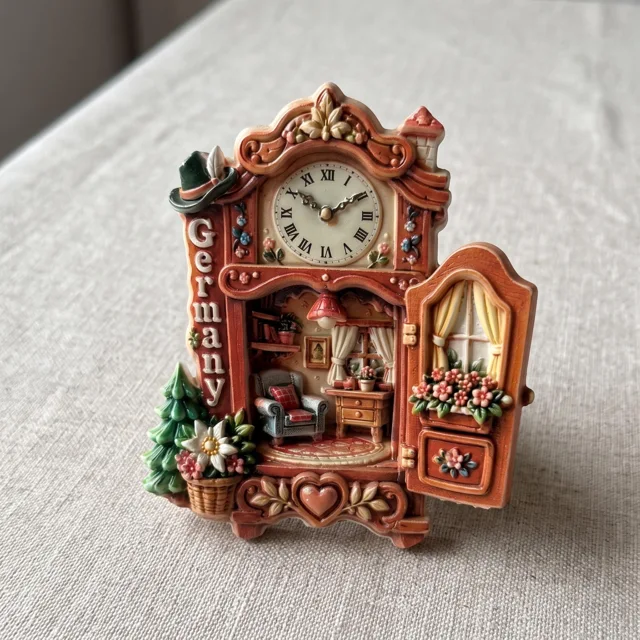
When you photograph products like the "Refrigerator Magnet: 3D Resin Miniature Clock Cabinet Germany Souvenir," show at least one image with the magnet affixed to a vertical metal plane so viewers can see how it reads in situ. Alternate images can show a tabletop or flatlay to emphasize sculptural detail, but always include that context shot for retail clarity.
Styling for lifestyle and catalog needs
Plan two parallel shoots for each product: a clean, consistent catalog image on a neutral background for product pages and a styled lifestyle shot that shows how the piece lives in a home. Keep catalog shots tightly composed, well-lit, and shot from a consistent angle; this helps customers compare items easily. Lifestyle images can add warmth—place magnets near a grocery list, photos, or kitchen linens to show how they complement home decor.
When styling, avoid over-accessorizing. Small decorative magnets with intricate scenes benefit from minimal, complementary props so the eye goes to the product. For travel-themed magnets such as the Finland landscape piece, a small cluster of travel ephemera or muted cookbook spines can hint at a story without overwhelming the subject. For inspiration from existing product pages, link to specific items like Finland Landscape Fridge Magnet and Resin Rustic Kitchen Scene With Provence Plaque to study how details read at different scales.
Focus, depth of field, and capturing detail
Tighter apertures increase depth of field but require more light; wider apertures isolate dominant details but risk blurring other sculpted elements. For small product photography for retailers, use a moderately narrow aperture (e.g., f/5.6–f/11 on many lenses) to keep most of a three-dimensional magnet in sharp focus while still separating it gently from the background. Use focus stacking if you need extreme edge-to-edge sharpness for close macro shots.
Pay special attention to the focal plane when photographing relief and layered decoration. Focus on the most important visual element—such as the cabin and lake in the Finland magnet or the clock face on the German clock cabinet piece—and make sure textures are legible at the sizes customers will view your images online. Capture at the camera’s highest reasonable resolution so you can crop for thumbnails and zoom views without losing clarity.
File preparation and consistent presentation
Export consistent-sized images and name files clearly for your catalog. Keep a master file with layers or RAW images for future edits. For e-commerce, provide a high-resolution main image, plus several cropping options (square for thumbnails, vertical for social posts). Optimize files for web to balance quality and page speed—use compressed JPEGs for product pages and retain high-resolution TIFFs or RAWs for archival or print use.
Include one or two tight detail shots showing texture and any small features buyers care about. If you have a product care page, link to helpful maintenance notes such as /care/. For wholesale or business inquiries, point retailers to /wholesale/ and to ask specific questions via /contact/. If you plan to show multiple pieces together, maintain identical lighting and background to make comparisons easy for buyers.
Safety, handling, and legal-minded captions
Small decorative items can include magnets and tiny parts; note safety in product descriptions and imagery. Keep small magnets and loose pieces out of reach of children and pets, and add a clear caption or line in imagery where appropriate that a swallowed magnet requires urgent medical attention. Don’t depict magnets attached to children’s products or include images implying safe use around unsupervised small children.
When you shoot pieces with delicate raised details, handle them with care during setup. Use clean gloves or lint-free cloths if fingerprints or oils could alter finish or color in photos. Accurate captions and descriptive alt text help both shoppers and retailers understand the piece—include material cues, scale notes, and a link to the product page, for example Refrigerator Magnet: 3D Resin Miniature Clock Cabinet, to make discovery straightforward.
Working efficiently for catalogs and social
Batch work is your friend. Shoot all catalog items on the same backdrop and light setup to reduce retouching time. Create a short checklist for each product: orientation shots, at-scale image, detail close-ups, and one lifestyle image. Keep props and lighting consistent so editing across multiple items requires only minor color and exposure tweaks.
For social media, produce vertical or square crops alongside the catalog files so you don’t recompose every time. Small decorative magnets photograph well in short stop-motion clips or slow pan videos—capture a well-lit still sequence during the session to repurpose later. For ordering or wholesale inquiries, direct retail partners to /wholesale/ and have them contact ECLIPSE GIFTS LLC at [email protected] for details.
Topics: small product photography for retailers, decorative magnet photography, home decor product photos, retail product styling