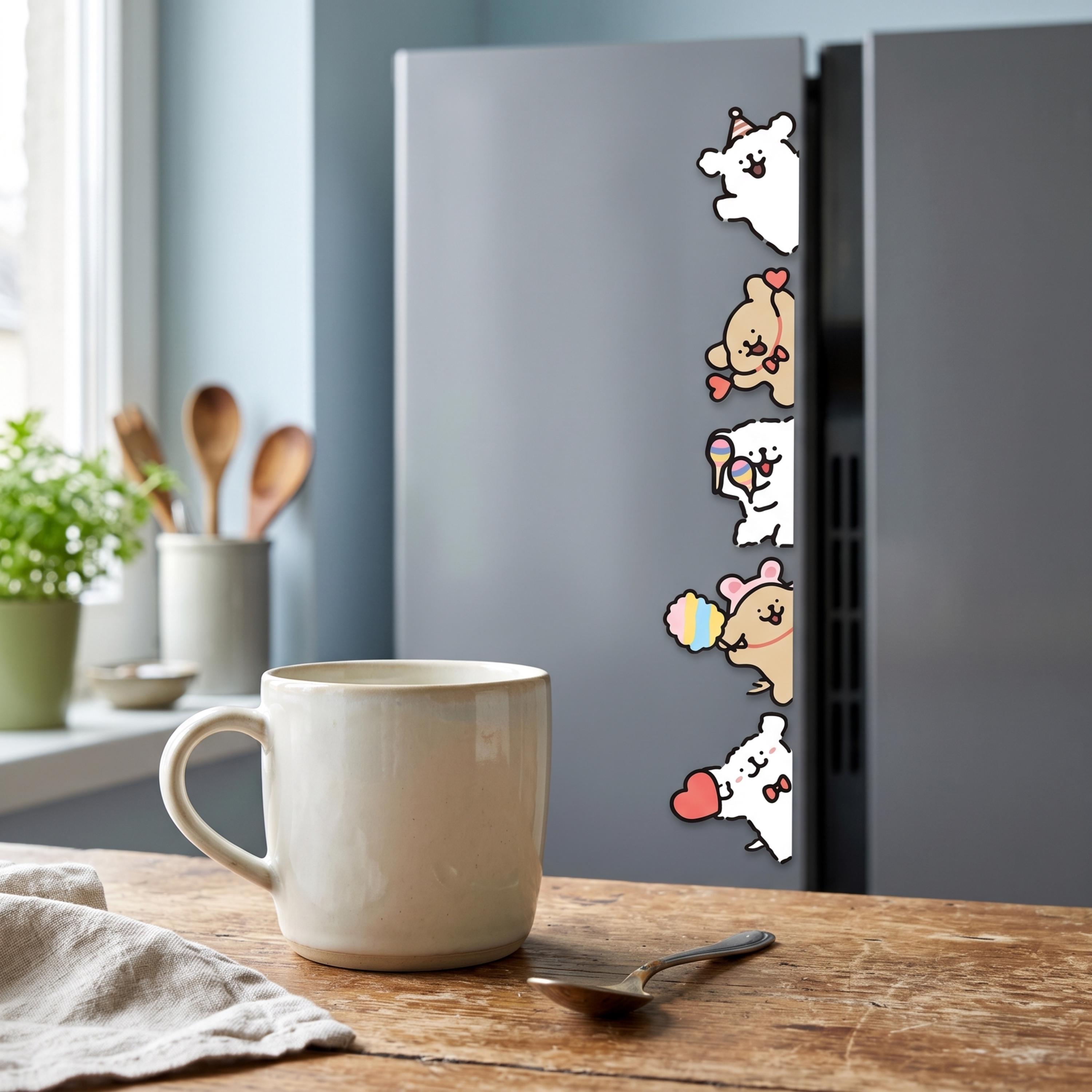
Product themes help shoppers understand quickly what you sell and why items belong together. For independent gift retailers and home-decor shoppers, themed gift retail displays reduce browsing fatigue, highlight complementary items, and make inventory decisions simpler. This article covers theme selection, anchor pieces, display flow, sign language, and safety notes specific to decorative magnets and similar small home accents.
Choose a Clear Theme That Resonates
Start by picking a theme with a clear emotional or stylistic pull—seasonal, motif-based (animals, botanicals), room-type (kitchen, entryway), or use-case (housewarming, hostess gifts). Keep themes tight enough that shoppers can immediately recognize what ties items together, but flexible enough to include a variety of sizes and price points. For example, a "cat and cozy" motif can include dimensional fridge magnets, small framed art, and tea towels with complementary colors.
Work off your current inventory and what consistently sells. If decorative magnets are a big part of your catalog, build a display around a few standout pieces and add supporting items in matching palettes or textures. Use internal links to help customers explore collection options, such as the animal-focused collection at /collections/animal-friends/.
Use Anchor Pieces to Create Visual Focus
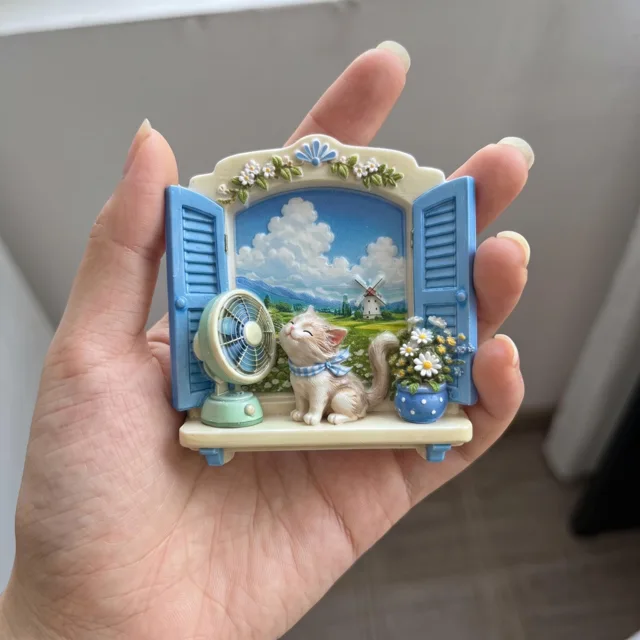
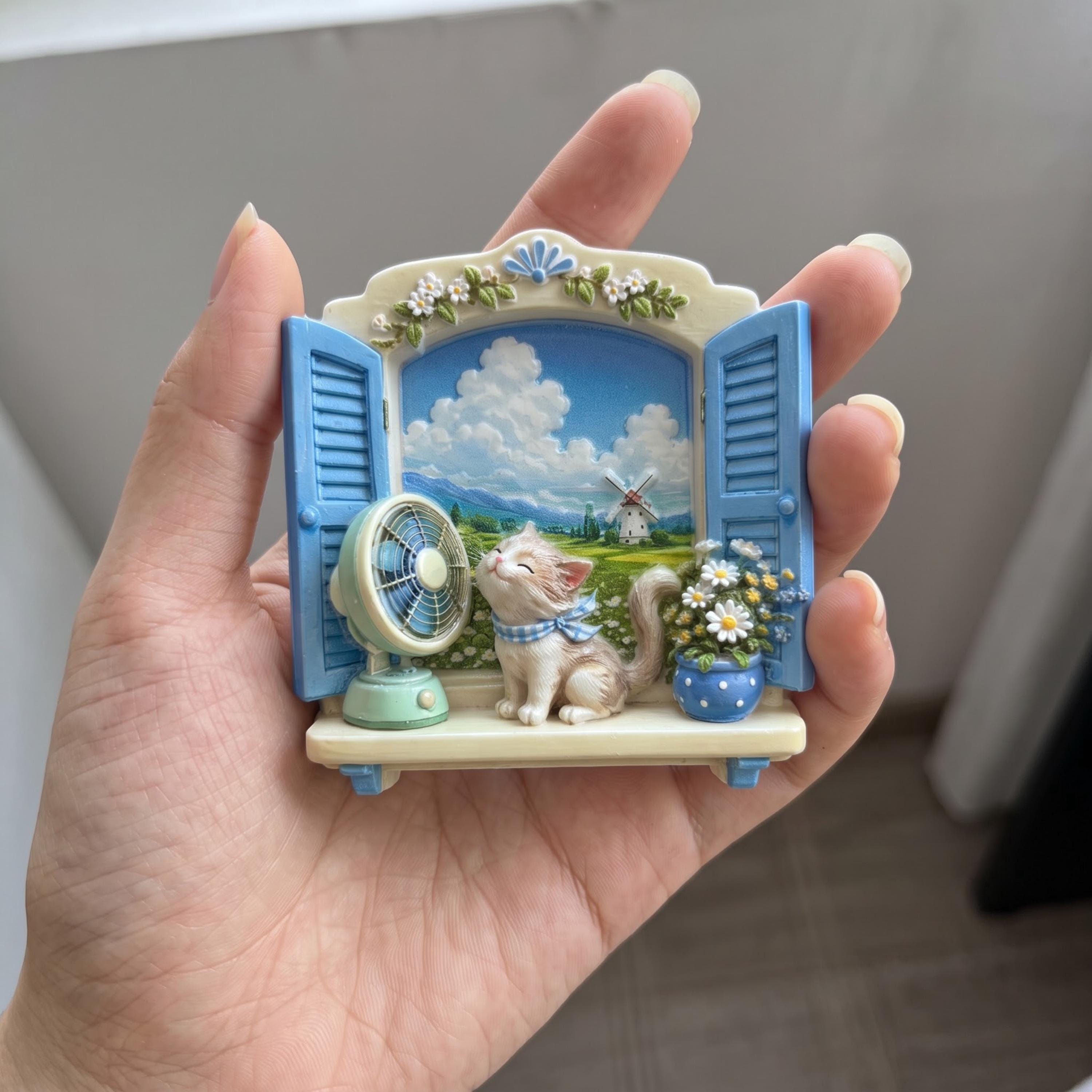
An anchor piece gives the eye somewhere to rest and sets the tone for the whole display. For magnet-focused displays, choose a dimensional piece with character—its scene or color palette should define the group. The cat window scene magnet with blue shutters (Refrigerator Magnet: Cat Window Scene With Blue Shutters and Flowers) is a great anchor because its layered view and strong color contrast make it legible from a distance.
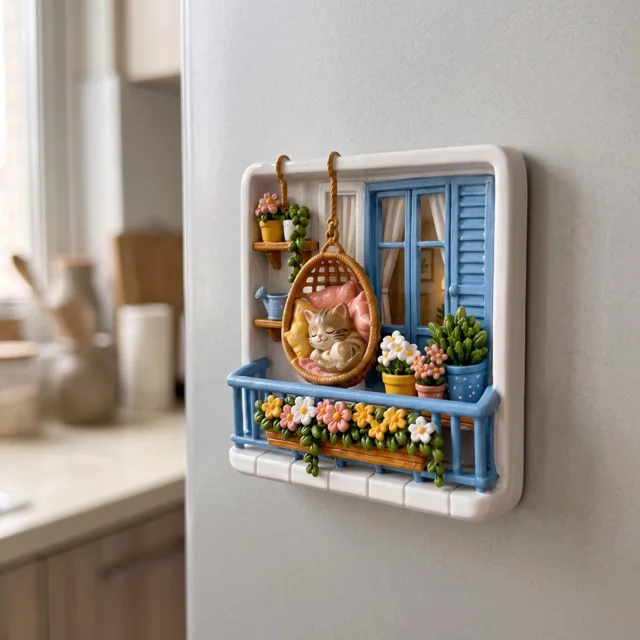
Pair the anchor with one or two secondary anchors of similar scale or finish so the arrangement feels intentional. The raised cat balcony magnet (Resin Fridge Magnet: Raised Cat Balcony Scene With Colorful Flowers) can echo the first piece’s shutters-and-floral story, giving shoppers a clear theme to shop around. Anchors also act as merchandising cues when you rotate stock seasonally—swap the main piece and re-style around it rather than rebuilding the whole display.
Group by Subthemes and Color Story
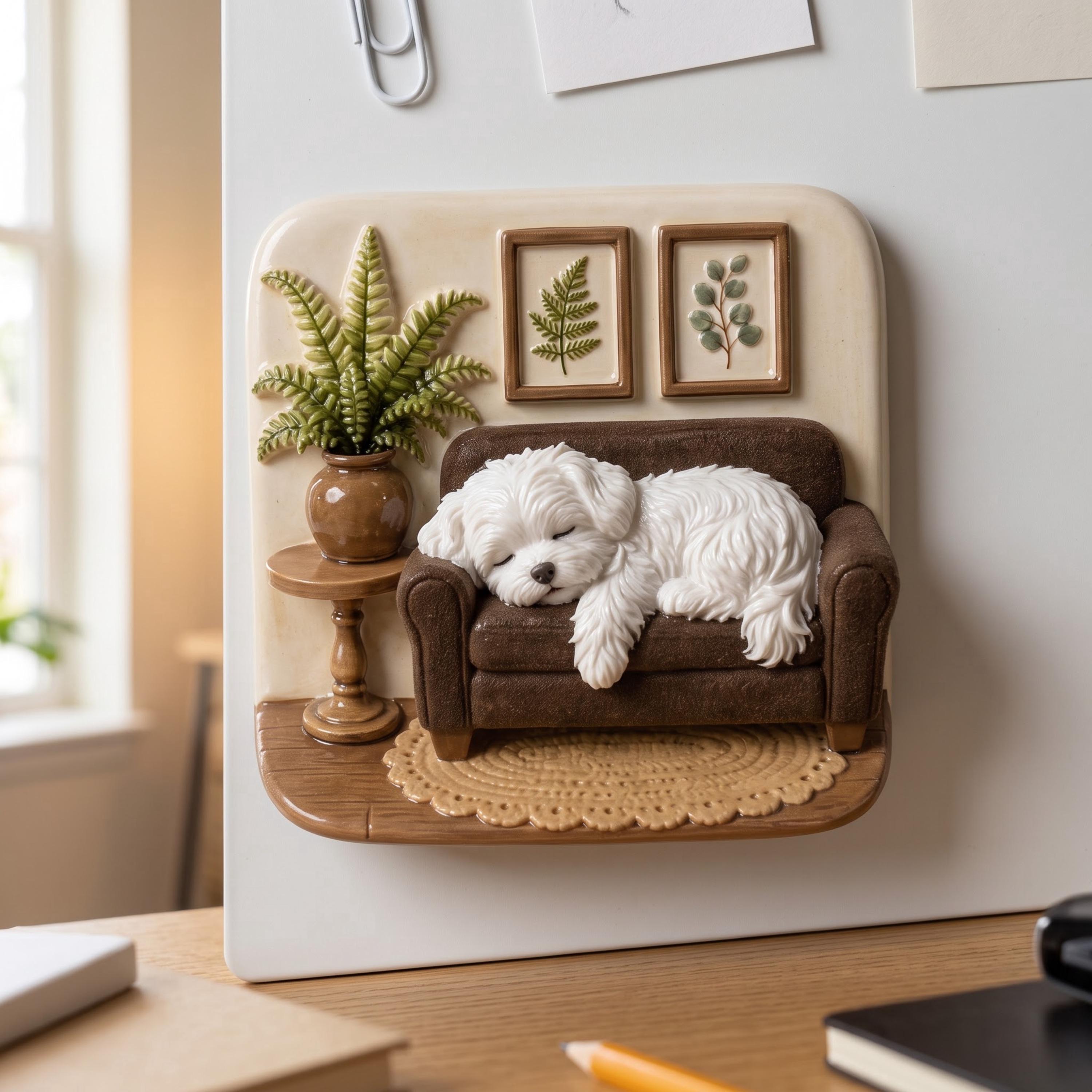
Within a broader theme, create subgroups to make decision-making easier: pets, botanicals, or "miniature interiors." Grouping by color also simplifies visual harmony—organize items with similar palettes together so a customer can envision how a magnet will look on their own refrigerator or corkboard. The miniature white dog on a cozy brown sofa magnet suits neutral, warm sub-displays and works especially well next to woven textures and wood-toned props.
Use risers, trays, and small platters to define these sub-areas on a table or shelf. Keep items at different eye-levels to invite touch and close inspection; small scene magnets benefit from being displayed at hand level so shoppers can appreciate details without picking everything up.
Cross-Merchandise to Increase Basket Size
Cross-merchandising encourages complementary purchases by placing related items together. For a magnet display, add items that pair naturally: small notepads, recipe cards, seasonal greeting cards, or ribbon-wrapped gift boxes. This nudges shoppers toward a complete gift solution rather than a single impulse buy.
Use signage and labeling to suggest pairings—“perfect as a housewarming accent” or “mix-and-match with other small scenes.” If you want to direct customers to more magnet styles online or in the catalog, link to related product categories and informational pages like the care guide at /care/. For retailers considering larger purchases, point them to wholesale details at /wholesale/.
Signage, Pricing, and Story Labels
Good signage clarifies purpose without shouting. Use short labels that name the theme (for example, "Window Garden Scenes") and include a one-line story or suggested use beneath the label. Keep price tags neat and consistent—displayed retail prices should be visible and match catalog listings so shoppers aren’t surprised when they inquire by email at [email protected] for purchase or order requests.
For themed gift retail displays, consider small cards that point out materials, gift occasions, or styling tips. A card that notes "pairs well with neutral textiles and ceramic planters" helps shoppers visualize the item in their home. Avoid cluttering the display with too many tags; one well-placed thematic card plus clear price tags is usually sufficient.
Practical Merchandising: Stock Levels, Rotation, and Safety
Plan your stock to support the display without overwhelming it. Keep extra units of anchor and popular pieces in backstock for easy replenishment so the presentation always looks full. Rotate in seasonal or color variations to keep repeat customers engaged. For a catalog or static showroom, swap featured items in a photographed vignette to keep visual content fresh.
For displays with small decorative magnets, include a safety note where appropriate. Keep magnets and small pieces away from children and pets—small parts can be choking hazards, and swallowed magnets require urgent medical attention. Display items in a way that discourages young children from handling multiple small pieces at once, and use secure stands or trays so items don’t slip into reach. If you need to direct wholesale or ordering questions, use the contact page at /contact/.
Measure Effectiveness and Iterate
After installing a themed display, monitor how shoppers respond. Note which subthemes attract attention, which anchors prompt questions, and whether cross-merchandised items move together. Small adjustments—replacing a secondary anchor, changing supporting textures, or rearranging heights—can shift shopper behavior more than wholesale changes.
Record what works and why, then apply those lessons to your next theme. Use your catalog pages and journal content to test narratives with customers; link to product pages for detail, such as the sofa dog magnet listing for shoppers who want a quiet interior vignette: Refrigerator Magnet: Miniature White Dog on Cozy Brown Sofa. Over time, a small library of successful themes becomes a fast, repeatable merchandising toolkit.
Topics: themed gift retail displays, retail visual merchandising, gift shop display ideas