Product photos are the primary way shoppers and retailers first connect with decorative magnets. Learning to read those images—beyond the obvious color and subject—helps you avoid mismatched scale, disappointing finishes, or unsuitable mounting. This article walks through practical visual clues and product-photo habits that make selecting a decorative refrigerator magnet easier and more reliable for home decor shoppers and independent gift retailers.
Look for reliable size cues and visual scale
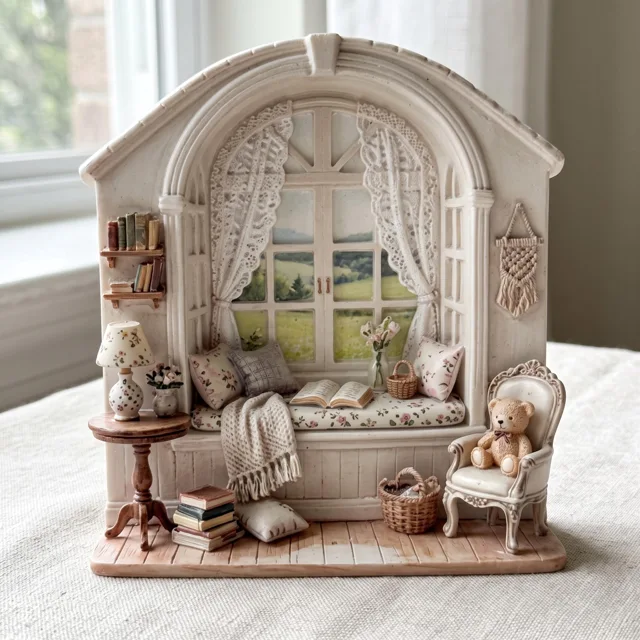
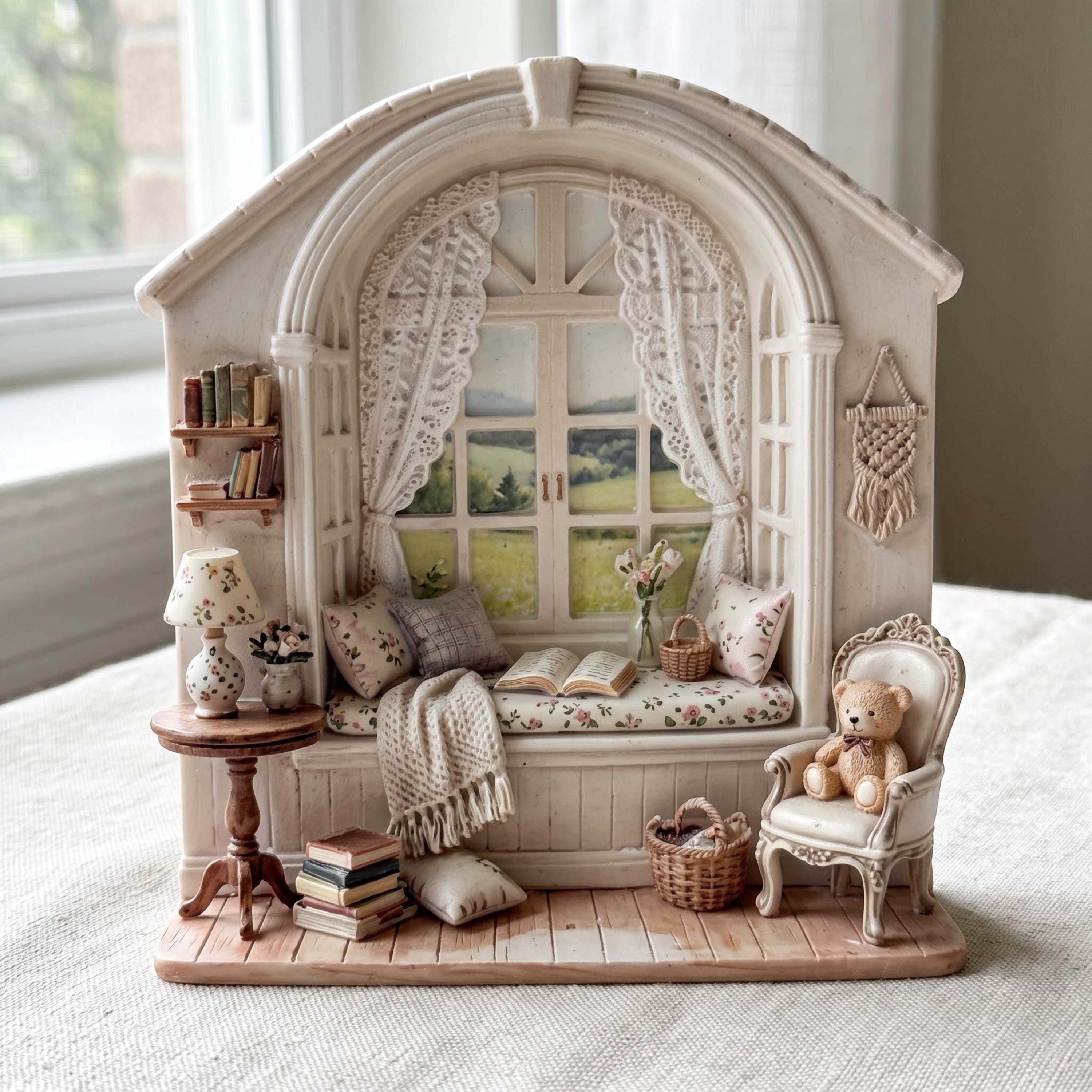
Photos that show a magnet in context help you judge whether the piece will feel delicate or bold on your refrigerator. If a product image includes common objects—keys, a card, or a standard-sized photograph—you can infer real-world scale. For example, the 3D Cozy Window Reading Nook lists an approximate height of 7 cm; when paired with a contextual shot that includes a fridge door seam or a paper note, that 7 cm becomes meaningful rather than abstract.
When photos lack context, inspect the listed dimensions closely and compare with familiar objects you own. A small decorative magnet that reads 7 cm tall will look quite different on a full-size stainless refrigerator than on a compact dorm fridge or a magnetic memo board. Sellers sometimes crop tight close-ups to emphasize sculptural detail; those images are useful for texture but not for estimating footprint.
Assess surface texture and finish from lighting
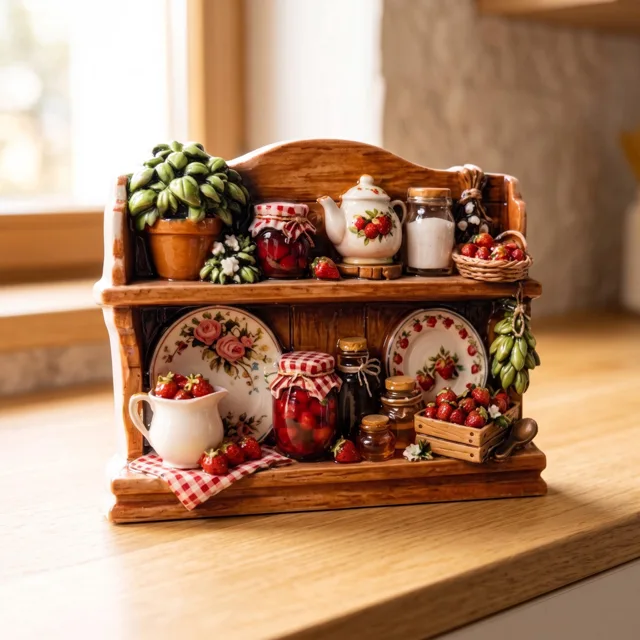
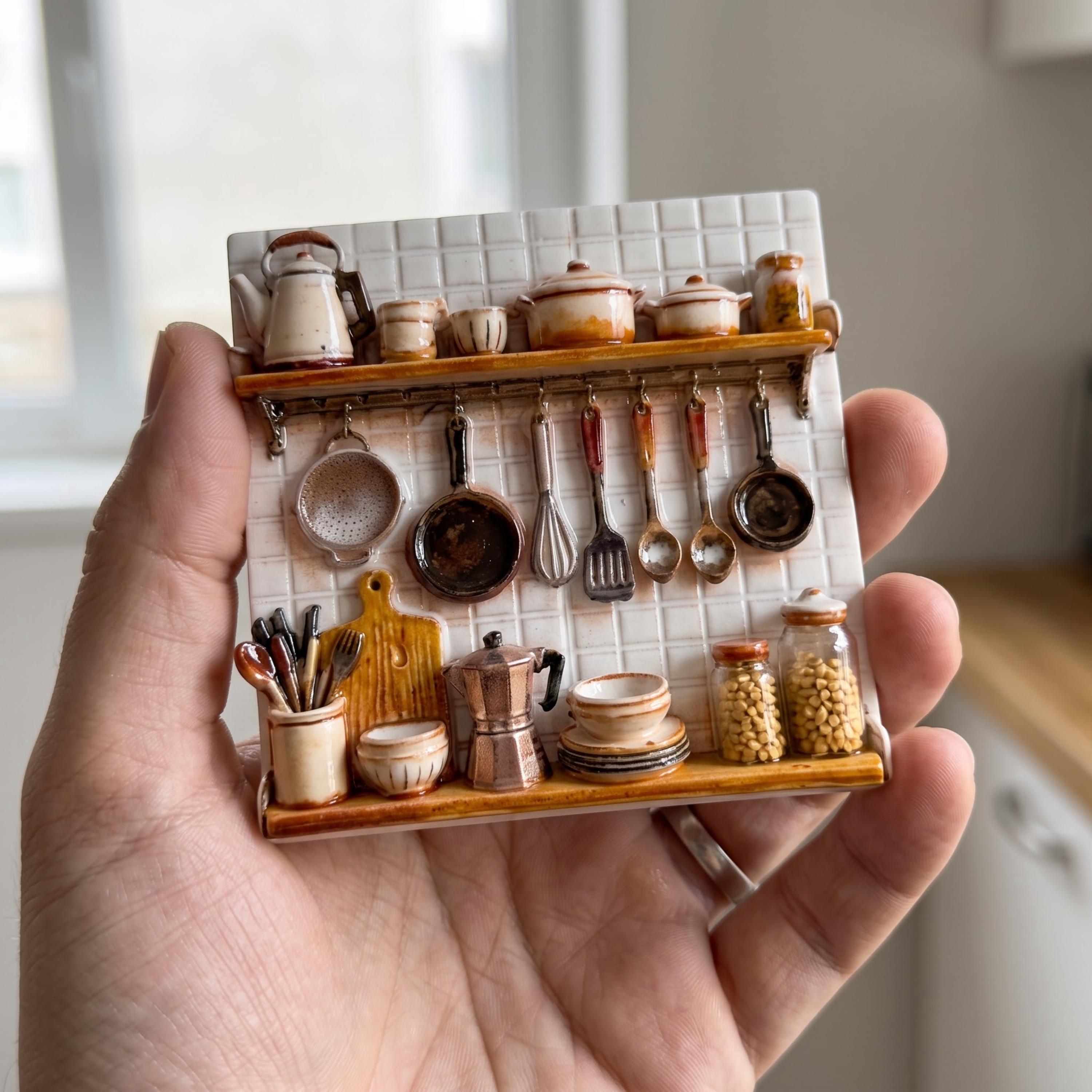
Lighting in product photographs reveals whether a magnet’s surface is glossy, matte, or textured. Specular highlights (bright, narrow reflections) usually indicate a glossy or lacquered finish, while soft, even light suggests a matte or satin surface. For decorative pieces with sculpted detail, such as the Rustic Kitchen Shelf Still Life, look for shadowing in crevices—deep shadows can mean pronounced relief that will catch dust, whereas shallow shadowing suggests a smoother profile.
Color reproduction varies by camera and lighting, so use photos as a directional guide rather than an exact promise. If the seller includes multiple angles or a close-up of an area with fine paintwork, you can better judge whether the color fields will read as hand-painted warmth or printed flat color. Multiple images showing the same piece under different light give the most reliable impression of finish.
Evaluate mounting and backing from visible details
A secure magnetic backing and how it’s attached matters for long-term use on a fridge. Product photos that show the magnet’s reverse or a side profile let you evaluate how the magnet is mounted—glued plate, inset magnet pocket, or embedded magnet. Even if the listing text states that the piece "holds securely to refrigerator doors," the photo of the backing clarifies whether the attachment is likely to survive repeated handling.
When images of the back are absent, infer mounting from the overall thickness and weight suggested by the photograph. Thin, flat magnets usually use adhesive-backed magnetic sheeting, while three-dimensional resin pieces often have a plated magnet inset. If you’re browsing for retail inventory, a clear photo of the backing is a practical necessity to assess durability and display options.
Read decorative detail and theme with close-ups
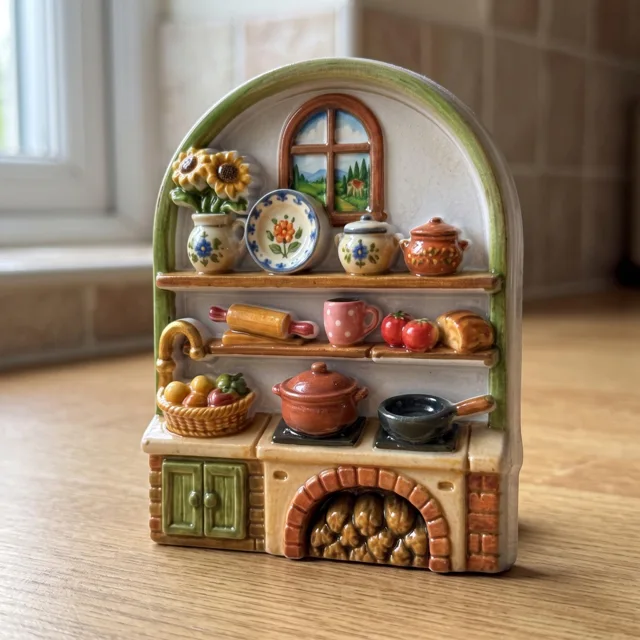
Close-up photos let you judge the quality of sculptural or painted detail—important for decorative magnets intended as small art objects. The Resin Kitchen Magnet Miniature Shelf Scene shows a composition of cookware, pottery accents, and a fireplace-inspired section; close-ups help you see whether those elements are crisply defined or softened in the molding process.
Consider the subject matter in relation to your space or retail demographic. A magnet with a country-kitchen still life works differently in a farmhouse-inspired shop than in a modern minimalist environment. Product photos that include lifestyle shots—fridge door with coordinating magnets or a vignette in a kitchen—help confirm theme compatibility and merchandising potential.
Check the photo set for multiple angles and use cases
When sellers provide a set of images—front, back, side, and contextual placement—you gain a three-dimensional sense of the piece. Rotational views reveal undercuts, overhangs, or thin elements that might be fragile in transit or during handling. Multiple angles also uncover asymmetrical designs where one profile may be visually heavier than the other, which matters for display balance on a vertical surface.
Look for at least one image showing the magnet used for its intended purpose: on a refrigerator door, metal memo board, or cabinet. This demonstrates expected scale and gives implicit clues about the magnet’s hold. If you're ordering for a retail store, plan to display sample pieces in the most likely arrangement customers will encounter, and use the product photos as a guide for which grouping or pairing might be most effective on your shelf or tabletop.
Factor in safety and practical handling from images
Product photos can communicate practical safety details. If a magnet has small detachable parts, visible seams, or very thin protrusions, treat that as a signal to keep the item away from children and pets. The miniature elements in the Reading Nook and kitchen-shelf magnets are decorative accents; ensure customers understand that magnets and small pieces should be kept out of reach. A swallowed magnet requires urgent medical attention—this is an important safety note to include in your merchandising and labeling.
For retailers, photos that reveal how robustly elements are attached help determine whether pieces should be shelf-sample-only or sold boxed. When photos imply delicate construction, consider posting clear care instructions. You can link customers to your general guidance at /care/ and provide wholesale buyers with additional merchandising suggestions at /wholesale/. For direct inquiries, ECLIPSE GIFTS LLC can be contacted at /contact/ or via email at [email protected].
Use product photos to plan merchandising and pairing
Photos showing complementary pieces or suggested groupings can spark merchandising ideas for home shoppers and retailers. If a magnet image displays a coordinated color palette or recurring motif, you can plan clusters on a fridge door or a small gift display table. The warm palette and layered composition of the Rustic Kitchen Shelf Still Life make it an attractive partner for other food- or garden-themed accents.
Retail buyers should save representative product images to plan shelf tags, price cards, and pairing suggestions ahead of receiving inventory. For shoppers, keep screenshots to compare scale and tone with your existing decor before making a mailto order request—ECLIPSE GIFTS LLC handles orders via email rather than online card payment. If you need more images or angle shots for a buying decision, reach out through /contact/ to request additional photos or clarification.
Topics: choosing magnets from product photos, magnet product photography, refrigerator magnets, decorative magnets shopping